Blow the Shofar Ministry
Jewish Issues
סוגיות יהודיות
תקעו בשופר משׁד

Jewish Issues

Documenting Antisemitic Incidents in Canada and Around the World

“Pray for the peace of Jerusalem: May they prosper who love you.” — Psalm 122:6

Anti-Semitism is one of the world’s oldest hatreds, yet it continues to manifest itself in new and troubling ways. Physical assaults, acts of vandalism, threats against synagogues, harassment of Jewish students, online incitement, and attacks on Jewish communities are occurring with increasing frequency across many nations. Canadian government reporting has likewise recognized a significant rise in antisemitic hate crimes in recent years.

This page serves as an ongoing record of significant reported antisemitic incidents in Canada and around the world. Our purpose is not to promote fear or sensationalism, but to provide accurate, verified information that helps Christians and others understand the reality facing Jewish communities today. Each report is carefully researched using reputable news organizations, police statements, government releases, and recognized Jewish community organizations whenever possible. Because investigations often evolve, information may be updated as additional facts become available.

As followers of the God of Israel, we believe silence is never the proper response to hatred. We are called to stand against antisemitism in all its forms, to pray for the Jewish people, to speak the truth with compassion, and to encourage justice wherever hatred appears.

May these reports serve as a reminder that vigilance, education, prayer, and moral courage remain essential in confronting one of history’s oldest forms of prejudice.

Our Commitment: Every incident published on this page is presented with the goal of accuracy, fairness, and respect for the victims. When new evidence emerges or investigations reach a conclusion, reports will be updated accordingly.

Illustration for Antisemitism Reported as Widespread on Canadian University Campuses
Posted August 8, 2026

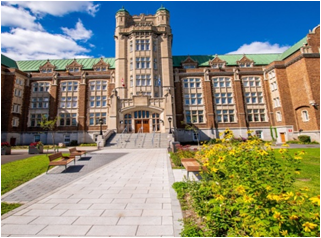
Antisemitism Reported as Widespread on Canadian University Campuses

A new government-commissioned report has raised serious concerns about antisemitism on Canadian university campuses. The Campus Antisemitism and Student Experiences (CASE) report found that 96 per cent of Jewish students surveyed experienced or witnessed antisemitism during the previous 12 months.

Former Carleton University student Alexa Barrett-Taller said she experienced several antisemitic incidents, including one involving a professor whom she alleges blamed Jewish people for the October 7, 2023 Hamas attack on Israel.

The CASE study surveyed approximately 900 Jewish students and found that 18 per cent of reported antisemitic incidents involved faculty members. Report co-author Jack Jedwab said the evidence indicates campus antisemitism is neither isolated nor episodic and can reasonably be described as systemic.

Student testimony included disturbing allegations. One Jewish student reported being told to ‘go die’ after identifying as Jewish and Israeli. Another alleged that a professor called for Zionists to be killed, while another student was reportedly chased from a building after people shouted, ‘There’s a Jew … let’s get him.’

The report also found serious concerns about university responses. Seventy per cent of Jewish students said their university does not take antisemitism seriously, while 68 per cent said their campus is not a safe and inclusive environment for Jewish students.

Concordia University student Anastasia Zorohinsky described being harassed on campus and said Jewish students are increasingly being blamed for Israeli government decisions simply because they are Jewish. The hostility is affecting how openly students express their identity. Seventy-two per cent limit what they say in class about being Jewish, while 57 per cent avoid displaying Jewish symbols because of safety concerns.

Jewish advocacy organizations have called on universities and governments to take concrete action, declaring that ‘the time to act is now.’ Despite her experiences, Barrett-Taller continues to wear her Star of David proudly, saying she wants Jewish students to feel safe on Canadian university campuses.
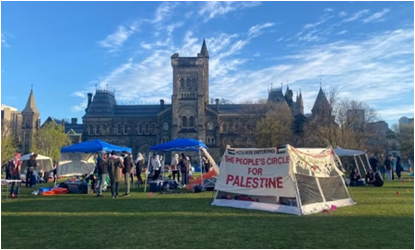

Illustration for Antisemitism Reported as Widespread on Canadian University Campuses
Posted August 8, 2026Jerusalem Post

Antisemitism Reported as Widespread on Canadian University Campuses

A major Canadian study has raised serious concerns about antisemitism at universities across the country. The Campus Antisemitism and Student Experiences (CASE) project surveyed approximately 900 Jewish students and 755 students from the broader campus population.

The report found that 95.7 per cent of Jewish students experienced or witnessed at least one antisemitic incident during the previous 12 months. Furthermore, 84 per cent considered antisemitism a serious campus problem, while 68 per cent said their university was not a safe and inclusive environment for Jewish students.

Reported incidents included antisemitic vandalism, intimidation and threats, as well as physical violence. Many Jewish students also said they were changing their behaviour because of the campus climate. Approximately three-quarters reported limiting what they said about being Jewish in class, while 57 per cent avoided displaying Jewish symbols because of safety concerns.

Particularly troubling were reports involving faculty and the classroom. Nearly one in five Jewish students identified professors as a source of antisemitic incidents, while more than a third encountered course material or classroom discussions they considered antisemitic. Students also reported encountering Holocaust denial or distortion, confidence in university responses was low, and many students who formally reported an incident said they were dissatisfied with how their university handled the matter.

CASE concluded that antisemitism should no longer be regarded simply as a series of isolated incidents, but as a broader campus-climate problem. The report warned that unless universities and government leaders respond effectively, campuses could continue to spread anti-Jewish hatred into the wider Canadian community.

Illustration for B’nai Brith Canada Says Museum Advisers Publicly Justified or Minimized Hamas’ October 7 Attack
Posted August 6, 2026Jerusalem Post

B’nai Brith Canada Says Museum Advisers Publicly Justified or Minimized Hamas’ October 7 Attack

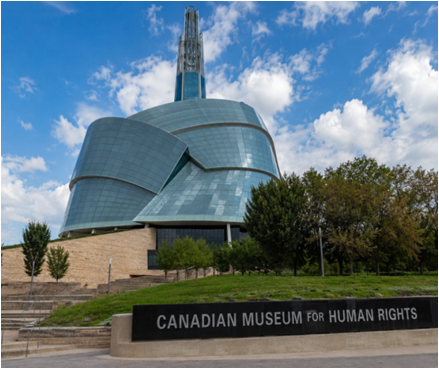
B’nai Brith Canada says an extensive review of the Canadian Museum for Human Rights (CMHR) Palestine Uprooted: Nakba Past and Present exhibit found that several individuals involved in advising its content had publicly justified or minimized Hamas’ October 7, 2023 terrorist attack.

According to the report, members of the Canadian Palestinian Association of Manitoba (CPAM), including Rana Abdulla and president Ramsey Zeid, contributed to the exhibit through the Palestinian Content Advisory Network while sharing social-media posts that, according to B’nai Brith, defended the October 7 massacre, discouraged condemnation of the attack, repeated Hamas propaganda regarding Israeli hostages, and promoted claims that Israel was committing genocide.

The organization also argues that the exhibit itself omits important historical context by referring to Hamas simply as the perpetrator of an ‘attack’ without identifying it as a terrorist organization and by describing the Second Intifada without acknowledging the more than 1,000 Israelis killed in terrorist attacks.

B’nai Brith contends that allowing individuals with such publicly documented views to help shape a national human-rights exhibit compromises the museum’s neutrality, credibility, and educational mission.

The organization has called on the Canadian Museum for Human Rights to disclose the extent of these advisers’ influence, explain how their backgrounds were vetted, and clarify what safeguards were in place before incorporating their input into a federally funded national human-rights exhibit.

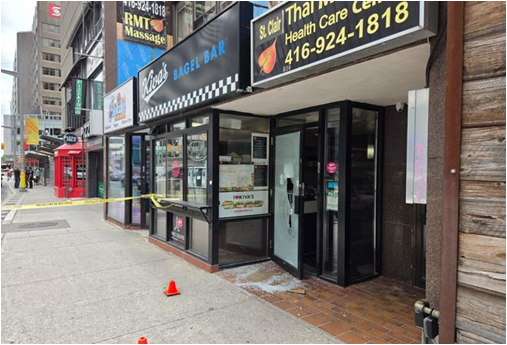
Illustration for Toronto Police Investigate Two Suspected Hate-Motivated Incidents Targeting Separate Locations of Kiva’s Bagel Bar
Posted July 26, 2026

Toronto Police Investigate Two Suspected Hate-Motivated Incidents Targeting Separate Locations of Kiva’s Bagel Bar

Toronto Police are investigating two suspected hate-motivated incidents that targeted separate locations of the Jewish-owned Kiva’s Bagel Bar chain overnight on Sunday, one of which involved a firearm being discharged at the business.

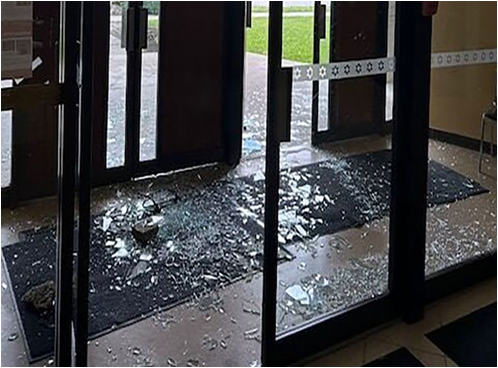
At the Yonge Street and St. Clair Avenue West location, investigators found evidence that a window had been struck by gunfire, while a second location near Bathurst Street and Steeles Avenue West sustained a broken window, although police found no evidence that shots had been fired there.

Fortunately, no injuries were reported in either incident, and investigators had not yet released any suspect descriptions as they continued to examine surveillance footage and gather evidence.

The investigation is being led jointly by the Toronto Police Hate Crime Unit, the Guns and Gangs Integrated Task Force, and local divisional officers, who are treating the attacks as potentially linked because both targeted the same Jewish-owned business chain.

Toronto Mayor Olivia Chow strongly condemned the incidents, stating that hate has no place in Toronto and affirming that police will continue to strengthen security measures around synagogues, Jewish community centres, and other Jewish institutions throughout the city.

Jewish community leaders expressed both anger and deep concern that violence against Jewish businesses continues to escalate, while emphasizing that, despite being shaken by the attacks, Toronto’s Jewish community remains determined to live openly, proudly, and without fear.

Illustration for B’nai Brith Canada Reports Sharp Rise in Violent Antisemitic Incidents
Posted July 15, 2026Montreal

B’nai Brith Canada Reports Sharp Rise in Violent Antisemitic Incidents

Following a series of brazen antisemitic attacks in Quebec, B’nai Brith Canada reported that violent antisemitic incidents continue to rise at an alarming rate across the country.

Since January 1, B’nai Brith has documented 27 violent antisemitic incidents in Canada—more than double the 10 incidents recorded during all of 2025. Only two months earlier, the organization had already issued an unusual interim report after documenting 11 violent incidents, citing the rapid escalation of attacks against Jewish Canadians.

According to B’nai Brith, 2026 now ranks second only to 2023 in the number of violent antisemitic incidents recorded and has already exceeded the annual totals for 2022, 2024, and 2025.

B’nai Brith warned that antisemitic violence is becoming increasingly targeted and brazen and called on all levels of government to respond with stronger enforcement of hate-crime laws, improved coordination among law-enforcement agencies, and the creation of a National Task Force to Combat Antisemitism.

The organization also emphasized that Jewish Canadians continue to be the most frequent victims of police-reported hate crimes and urged political leaders to recognize and confront antisemitism, including its anti-Zionist manifestations.

Illustration for Montreal — Four Orthodox Jewish Men Assaulted
Posted July 3, 2026

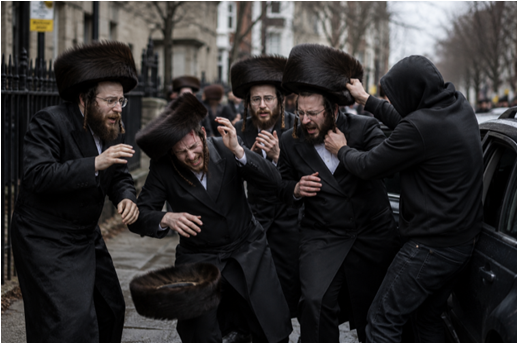
Montreal — Four Orthodox Jewish Men Assaulted

Four Orthodox Jewish men were attacked in Montreal’s Outremont neighborhood in what police are investigating as a possible hate-motivated crime.

According to reports, a man allegedly got out of a vehicle, physically assaulted the men, and forcibly removed their traditional fur hats, known as shtreimels.

These hats are worn by many Hasidic Jewish men on Shabbat and Jewish holidays and carry both religious and cultural significance.

The stolen shtreimels are also highly valuable, often worth several thousand dollars each. Beyond the financial loss, the attack was especially disturbing because it appeared to target visible Jewish identity.

Community leaders condemned the incident, saying it reflects a growing climate of intimidation and antisemitic hostility faced by Jewish residents in Montreal.

The attack has renewed concern over the safety of Jewish communities in Canada, particularly in neighborhoods where Orthodox and Hasidic Jews are easily identifiable. Police continue to investigate the incident and determine whether hate-crime charges are warranted.

Illustration for Winnipeg — Canadian Human Rights Museum Display ‘Nakba Past and Present’
Posted June 29, 2026

Winnipeg — Canadian Human Rights Museum Display ‘Nakba Past and Present’

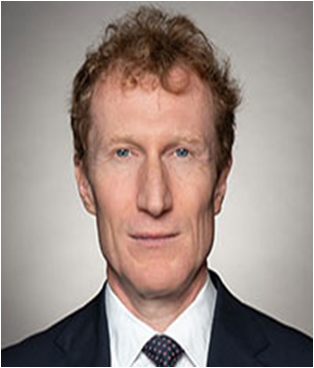
The federal government has publicly criticized the Canadian Museum for Human Rights in Winnipeg over its exhibition Palestine Uprooted: Nakba Past and Present after Heritage Minister Marc Miller said the display failed to provide essential context regarding Hamas and the October 7, 2023 terrorist attacks.

Miller described these omissions as ‘an error in governance’ and said the exhibit should have explicitly identified Hamas as a terrorist organization, consistent with Canada’s designation under the Criminal Code. He also argued that the display failed to adequately acknowledge that Hamas deliberately targeted Jewish civilians during the October 7 attacks in Israel.

Among the minister’s principal criticisms were that the exhibit did not clearly identify Hamas as a terrorist organization, did not clearly explain that Hamas intentionally targeted Jews during the October 7 attacks, and framed these omissions as important contextual failures rather than merely curatorial choices.

While emphasizing that governments should generally refrain from directing museum curation, the minister said the significance of the omissions warranted public criticism and called for the museum to address the deficiencies.

The controversy has drawn sharply divided reactions. Jewish organizations welcomed the minister’s comments, arguing that the exhibit presented an incomplete historical narrative by omitting Hamas’s terrorist designation and insufficiently addressing the antisemitic nature of the October 7 attacks. Others, including advocates of museum independence, argued that political officials should not interfere in curatorial decisions, warning that such interventions could undermine the autonomy of Canada’s national cultural institutions.

The Canadian Museum for Human Rights has defended the exhibition as an exploration of the historical and contemporary experiences of Palestinians. The debate has intensified broader discussions over historical interpretation, institutional neutrality, and the responsibility of publicly funded museums to provide balanced and comprehensive context when addressing contentious international conflicts.

Illustration for Nakba Exhibit at Canadian Museum for Human Rights Sparks National Debate
Posted June 28, 2026

Nakba Exhibit at Canadian Museum for Human Rights Sparks National Debate

A new exhibition at the Canadian Museum for Human Rights (CMHR) examining the Palestinian Nakba has drawn significant criticism from Jewish organizations and community leaders, who argue that it presents a one-sided account of the 1948 Arab-Israeli conflict while omitting essential historical context.

The exhibit, Palestine Uprooted: Nakba Past and Present, opened to the public on June 27 after four years of development. Before its opening, an estimated 200 to 300 demonstrators gathered outside the museum, expressing concern that the exhibition could contribute to rising antisemitism by failing to acknowledge the broader historical circumstances surrounding Israel’s establishment.

Critics, including Gail Asper, whose father helped found the museum, and former CMHR trustee Mark Berlin, argued that the exhibit discusses Palestinian displacement without recognizing the simultaneous expulsion of approximately 850,000 Jews from Arab countries. Israel’s ambassador to Canada, Iddo Moed, also criticized the exhibition, describing it as an incomplete and politically contested narrative.

Museum officials defended the exhibit, stating that it underwent scholarly review and was designed to present Palestinian experiences through a human-rights perspective. CEO Isha Khan noted that many critics had not viewed the completed exhibition before commenting. The exhibit combines historical photographs, artifacts, oral histories, and multimedia displays documenting Palestinian displacement from 1948 through the present. It also references the October 7, 2023 Hamas attack and the humanitarian consequences of subsequent war in Gaza.

Curator Isabel Masoon said the exhibition seeks to preserve both the memory of displacement and the resilience of Palestinian culture. One featured participant, Fouad Sayahoun, who was displaced from Haifa as a child, expressed hope that sharing personal stories could promote understanding and eventual coexistence.

Protesters emphasized that they were not seeking to prevent Palestinians from telling their stories, but argued that the exhibit should also acknowledge parallel displacement of Jewish communities from Arab countries to provide visitors with a more balanced historical perspective. The museum said it is exploring a future project examining the experiences of Jewish refugees from Arab lands.

While no timeline has been announced, CMHR reaffirmed its commitment to combating antisemitism and presenting diverse human-rights narratives. The controversy has become part of a broader national discussion over how museums should present complex and deeply contested historical events while ensuring historical accuracy, balance, and public trust.

Illustration for Montreal — Fatal Shooting with Anti-Zionist Manifesto
Posted June 23, 2026

Montreal — Fatal Shooting with Anti-Zionist Manifesto

One of the most serious antisemitic incidents reported during June 2026 occurred on June 22 in Montreal’s Côte-des-Neiges district, home to one of Canada’s largest Jewish communities.

A gunman opened fire in a busy commercial area, killing a Jewish civilian, Michael Moshe Mirilashvili, and Montreal police officer Constable Mohamed Lamine Benkourdane, while seriously wounding another officer before being shot and killed by police.

The attack triggered an extensive emergency response, with nearby schools, synagogues, and businesses placed under lockdown as residents were ordered to shelter in place.

As investigators searched the suspect’s background, they discovered a lengthy manifesto outlining a mixture of extremist ideological beliefs. Reports indicated that the document combined misogynistic ‘incel’ ideology with anti-capitalist, anti-government, and antisemitic themes.

It also contained explicit anti-Zionist rhetoric and conspiracy theories about Zionists and Jewish influence, leading investigators and security experts to conclude that antisemitism formed part of the ideological worldview motivating the attacker. While authorities continued to investigate the precise motive, the writings raised significant concerns about the growing convergence of multiple forms of violent extremism.

The killing of a Jewish community member in a predominantly Jewish neighborhood intensified fears within Canada’s Jewish population, particularly as the attack occurred amid an already elevated level of antisemitic incidents following the October 7, 2023 Hamas attacks and the subsequent Israel-Hamas war.

Jewish organizations condemned the shooting as another reminder that anti-Jewish hatred can move beyond harassment and vandalism to deadly violence, while calling on governments to strengthen protections for Jewish institutions and more aggressively confront extremist ideologies before they escalate into acts of terrorism or targeted violence.

Illustration for Toronto Police Investigate Alleged Network Targeting Synagogues, Jewish Schools and the U.S. Consulate
Posted June 16, 2026

Toronto Police Investigate Alleged Network Targeting Synagogues, Jewish Schools and the U.S. Consulate

Toronto police say a series of shootings targeting synagogues, Jewish schools, and the U.S. Consulate were carried out by teenagers recruited through a sophisticated ‘criminals for hire’ network operating on encrypted messaging platforms.

Police Chief Myron Demkiw said the young suspects, some as young as 18, were allegedly paid to carry out the attacks and required to record every stage of the crimes as proof in order to receive payment. Investigators have linked the incidents through a consistent pattern of recruitment, execution, and documentation, describing the operation as an organized criminal enterprise designed to intimidate targeted communities.

Police have recovered a 9 mm handgun allegedly used in six shootings and a .45-calibre handgun believed to have been used in 21 separate incidents. Both firearms were traced to the United States, underscoring the cross-border nature of the investigation. Authorities are working with the RCMP and the FBI to identify those responsible not only for carrying out the attacks but also for directing and financing them.

The investigation is also examining whether foreign actors—including possible Iranian-linked involvement—played a role in funding or orchestrating the attacks. While police emphasized that no conclusions have yet been reached regarding foreign sponsorship, Demkiw said there is clear evidence that those behind the crimes intended to spread fear and insecurity, particularly within Toronto’s Jewish community.

He warned that the network extends well beyond Toronto, operating across provincial and national boundaries and potentially involving international connections, making it one of the most complex criminal investigations the city has faced in recent years.

Illustration for California Candidate Statement Sparks Outrage Over Antisemitic Content
Posted April 26, 2026

California Candidate Statement Sparks Outrage Over Antisemitic Content

A campaign statement submitted by California gubernatorial candidate Don J. Grundmann has drawn widespread condemnation after it appeared in the state’s Official Voter Information Guide.

The statement contained numerous antisemitic conspiracy theories, including false claims that Israel was responsible for the September 11 attacks, accusations that Jews seek world domination, and other long-standing antisemitic tropes.

Because California law generally requires candidate statements to be printed as submitted, the material was mailed to millions of registered voters as part of an official government publication.

Although the guide included a disclaimer stating that the candidates’ views did not represent those of the California Secretary of State, Jewish organizations argued that its inclusion gave the hateful rhetoric an appearance of legitimacy.

Organizations including the Anti-Defamation League (ADL), the Israeli American Council, and several California Jewish advocacy groups strongly condemned the publication, calling for stronger safeguards to prevent official government publications from disseminating antisemitic hate speech in the future.

California lawmakers have also proposed reviewing and strengthening the rules governing candidate statements in future voter guides.

The controversy has renewed debate over the balance between protecting free political expression and preventing the use of government publications to spread hatred and antisemitic conspiracy theories. Many community leaders argue that while free speech is a fundamental right, official election materials should not become a platform for promoting bigotry or incitement against any religious or ethnic group.

Candidate statement excerpt
Candidate statement as reproduced in the California voter guide.