Every terrorist organization in history has learned one lesson the civilized world refuses to acknowledge:
Terror works.
It works because free societies repeatedly reward it. It works because governments negotiate with it. It works because propaganda often overwhelms truth. And every time it succeeds, another terrorist organization learns the same lesson. It works when the victims are questioned more than the murderers.
And every time that happens, the next terrorist organization is watching.
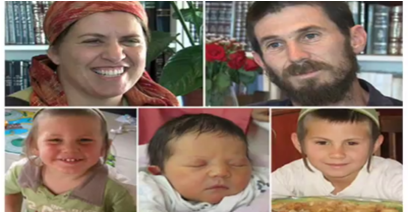
One tragic example occurred in March 2011, when terrorists entered the Fogel family home in Itamar.
Udi and Ruth Fogel were murdered. Their sons, eleven-year-old Yoav and four-year-old Elad, were brutally killed. Their three-month-old daughter, Hadas, was murdered in her crib. The killers were celebrated by many as heroes rather than condemned as murderers.
This was not an isolated tragedy. The murderers did not simply kill a family. They attempted to send a message that no home, no child, and no family would ever be beyond the reach of terror. This was not an isolated tragedy.
It was one chapter in a long campaign whose purpose has always been the same: to spread fear through the intentional targeting of innocent civilians. For years, more than 40,000 rockets were launched from Gaza toward Israeli towns and cities, forcing millions of civilians into bomb shelters and making ordinary life impossible.
Communities lived under constant threat as incendiary balloons and kites ignited fields, forests, and farmland. Hezbollah launched thousands more rockets from Lebanon, while ballistic missiles fired from Iran and Yemen repeatedly sent Israeli families running for shelter.
The objective was never simply military. The objective was terror.
One might expect atrocities of this magnitude to unite the civilized world in moral clarity. Instead, something very different happened.
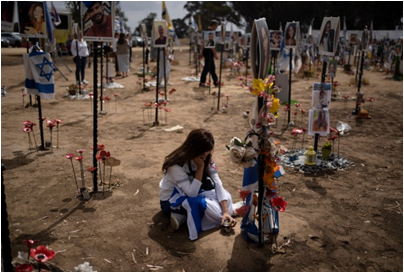
The world witnessed one of the worst massacres of Jews since the Holocaust. More than 1,200 people were murdered. Entire families were exterminated in their homes.
Young people attending a music festival were massacred. Elderly men and women were murdered. Children and infants were among the victims. Hundreds of innocent people were kidnapped and taken into Gaza, where many endured prolonged captivity under brutal conditions. Families were left not knowing whether their loved ones were alive or dead, adding unimaginable psychological suffering to an already unspeakable tragedy.
Yet even after these atrocities, much of the world's attention shifted away from the victims.
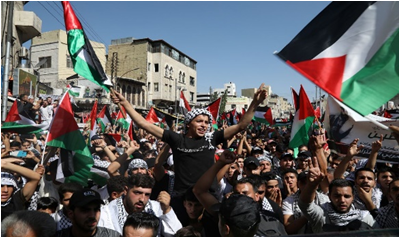
In many cities around the globe, demonstrations condemned Israel more loudly than the terrorist organizations responsible for the massacre. Propaganda spread rapidly across social media and was repeated by major news outlets before facts could be verified. Claims made by terrorist-controlled sources were often accepted without scrutiny, while Israel was frequently presumed guilty before investigations had concluded.
This is one of terrorism's greatest victories.
When lies are believed. When murder is rationalized. When hostage-taking leads to negotiations. When terrorists are exchanged for innocent civilians. When international aid intended for civilians is diverted to strengthen terrorist organizations. When leaders responsible for atrocities receive legitimacy instead of universal condemnation.
The lesson learned by every terrorist organization is simple: Terror works.
Terrorism succeeds not because terrorists possess superior military strength, but because they understand the power of fear. A relatively small group can influence governments, dominate international headlines, disrupt economies, divide societies, and pressure democratic leaders simply by deliberately targeting civilians.
Their goal is rarely military victory. Their goal is psychological intimidation and political coercion. History shows that terrorist groups have repeatedly embedded military infrastructure among civilian populations, stored weapons in civilian areas, and used hospitals, schools, religious sites, and residential neighborhoods for military purposes. Such tactics place civilians at enormous risk while creating opportunities to exploit civilian suffering for propaganda purposes. Civilians themselves become victims—first of terrorist organizations that endanger them, and then of the conflict that follows.
Every successful act of terrorism encourages another.
Every reward for violence becomes an incentive for future violence.
Every excuse made for the deliberate murder of civilians weakens the moral foundation of every democratic society.
This is not merely Israel's struggle.
Terrorism has struck cities across every continent. From New York and Madrid to London, Mumbai, Paris, Nairobi, and countless other communities, innocent civilians have been deliberately targeted in an effort to spread fear and influence political decisions. The methods vary, but the objective remains the same. Terrorism is not an Israeli problem, a European problem, or a Middle Eastern problem. It is a global assault on civilized society.
It is a warning to every free nation.
If terrorism succeeds against one democracy, every democracy becomes more vulnerable. If hostage-taking produces political gain in one conflict, others will imitate it. If the deliberate targeting of civilians is tolerated anywhere, no society is ultimately safe.
The lesson history should teach is not that terror succeeds. The lesson should be that terror never pays. That requires far more than expressions of outrage after every attack.
It requires courage.
For too long, much of the international community has condemned terrorism in carefully crafted statements while failing to take the decisive action necessary to defeat it.
Too often, governments issue press releases, call for restraint, express concern, and then return to business as usual while terrorist organizations regroup, rearm, recruit, and strike again. Every nation that values freedom, justice, and human dignity must stand united against terrorism in all its forms.
Governments should:
refuse negotiations that encourage future kidnappings
deny safe haven
freeze terrorist financing
prosecute supporters
strengthen international intelligence cooperation
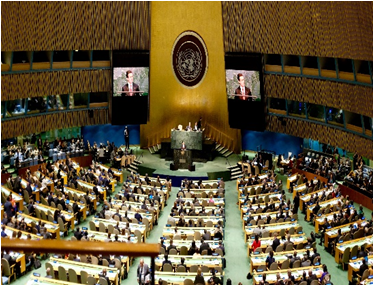
The United Nations, together with its member states, bears a special responsibility to lead the international community in the fight against terrorism. It should consistently condemn acts of terrorism regardless of the perpetrators or victims, strengthen international cooperation against terrorist organizations, encourage the sharing of intelligence and law-enforcement resources, and support measures that prevent the financing, arming, and safe haven of terrorist groups.
International institutions must ensure that terrorism is never legitimized through political double standards or selective condemnation.

Nations should enact and enforce strong anti-terrorism laws that ensure terrorists—and those who knowingly finance, recruit for, direct, harbor, or materially support terrorist organizations—are thoroughly investigated, prosecuted, and punished with the most severe penalties permitted under their legal systems.
Those who orchestrate or participate in mass murder, torture, kidnapping, sexual violence, or acts intended to terrorize civilian populations should face sentences that reflect the extraordinary gravity of their crimes, including, where authorized by a nation's laws, the possibility of capital punishment for the most heinous acts of terrorism.
No government, international organization, religious institution, or civil society group should remain silent in the face of terrorism. Silence in the face of deliberate evil is not neutrality—it emboldens those who use fear, violence, and murder as political weapons.
The international community must demonstrate, through both words and actions, that terrorism will never be rewarded, excused, or tolerated, and that those responsible will be held fully accountable under the rule of law.
But governments are not the only institutions that have too often remained silent.

The silence of many churches has also come at a terrible cost. Throughout history, silence in the face of hatred has never remained neutral. It has too often emboldened those who spread hatred and abandoned those who suffer from it.
As German pastor and theologian Dietrich Bonhoeffer demonstrated during the rise of Nazi tyranny, silence in the face of evil is never morally neutral. His courageous stand against the Nazi regime reminds us that refusing to confront evil allows it to flourish.
Silence in the face of evil is evil itself.
When churches refuse to speak clearly against terrorism, antisemitism, and the deliberate murder of innocent people, they surrender one of the most important moral voices entrusted to them. The Church is called to be the light of the world, not a silent observer. It is called to defend truth, uphold justice, comfort the afflicted, and confront evil without fear or compromise. When innocent men, women, and children are deliberately targeted because they are Jews, Christians should not remain silent. Silence may avoid controversy, but it cannot avoid responsibility.
The nations must choose whether terror will be rewarded—or resisted. The time for moral clarity, courage, and action is now.